Shopping for a Sedona home in the higher price range and wondering how to finance it? You are not alone. Many buyers compare jumbo and conventional loans and want a clear, local view of what it takes to close smoothly here. In this guide, you will learn the key differences, Sedona-specific appraisal and insurance factors, and smart steps to prepare a strong offer. Let’s dive in.
Jumbo vs conventional: quick definitions
A conventional conforming loan follows Fannie Mae and Freddie Mac guidelines and stays within the local conforming loan limit. A jumbo loan is any mortgage amount above that limit. Jumbos are funded by private investors, so rules vary by lender.
You can check the current conforming loan limit for Yavapai County on the Federal Housing Finance Agency site. Because limits update annually, verify the latest number before you set your financing strategy.
Key differences buyers notice
Down payment expectations
- Conventional loans can allow as little as 3–5% down for qualified buyers, with mortgage insurance. Many buyers choose 20% to avoid PMI.
- Jumbo loans often require larger down payments, commonly 10–25%. Second homes and investment properties usually land on the higher end.
- Practical takeaway: if your Sedona purchase exceeds the conforming limit, plan for more cash at close.
Interest rate outlook
- There is no universal rule. Jumbo rates can be close to, above, or even below conforming rates depending on market conditions.
- Pricing depends on your credit score, loan-to-value, reserves, property type, and the investor’s appetite for jumbos.
- Best move: get live quotes from multiple lenders and compare the total cost, including points and fees.
Mortgage insurance rules
- Conventional loans with less than 20% down generally require private mortgage insurance. The Consumer Financial Protection Bureau offers helpful guidance on PMI at consumerfinance.gov.
- Many jumbo products do not use standard PMI. Instead, they require lower LTVs, higher reserves, or alternative structures.
- Weigh the tradeoffs: paying PMI to keep more cash vs putting 20% down to avoid it.
Credit score and history
- Conventional loans can approve borrowers with lower scores, but the best pricing typically shows up with scores in the mid-700s and above.
- Jumbo lenders ask for stronger credit. Many require high-600s to mid-700s minimums, with top pricing at 740 and above.
- If your credit is thin or recovering, jumbo options can be fewer and costlier.
Debt-to-income and reserves
- Conventional loans often allow DTIs in the low-to-mid 40s, depending on the profile.
- Jumbo loans commonly cap DTI lower and ask for more reserves. Six to twelve months of PITI in liquid assets is common for larger jumbos or second homes.
- Plan ahead: these reserve requirements can be a surprise. Document assets early.
Documentation and underwriting
- Conventional loans often use automated underwriting systems, such as Fannie Mae’s and Freddie Mac’s tools. You can learn about these programs on Fannie Mae and Freddie Mac.
- Jumbo loans rely more on manual reviews, additional bank statements, and deeper income verification. Self-employed buyers should expect to provide tax returns, profit-and-loss statements, and detailed asset documentation.
- More documentation can lengthen the process, so build extra time into your plan.
Closing timeline
- Conventional loans commonly close in 30–45 days with an efficient lender.
- Jumbo loans often take 30–60 days. Complex properties, second homes, and unique income profiles can push longer.
- The most common delays are appraisal issues, extra asset checks, and condo or HOA reviews.
Sedona-specific property factors
Appraisals for unique homes
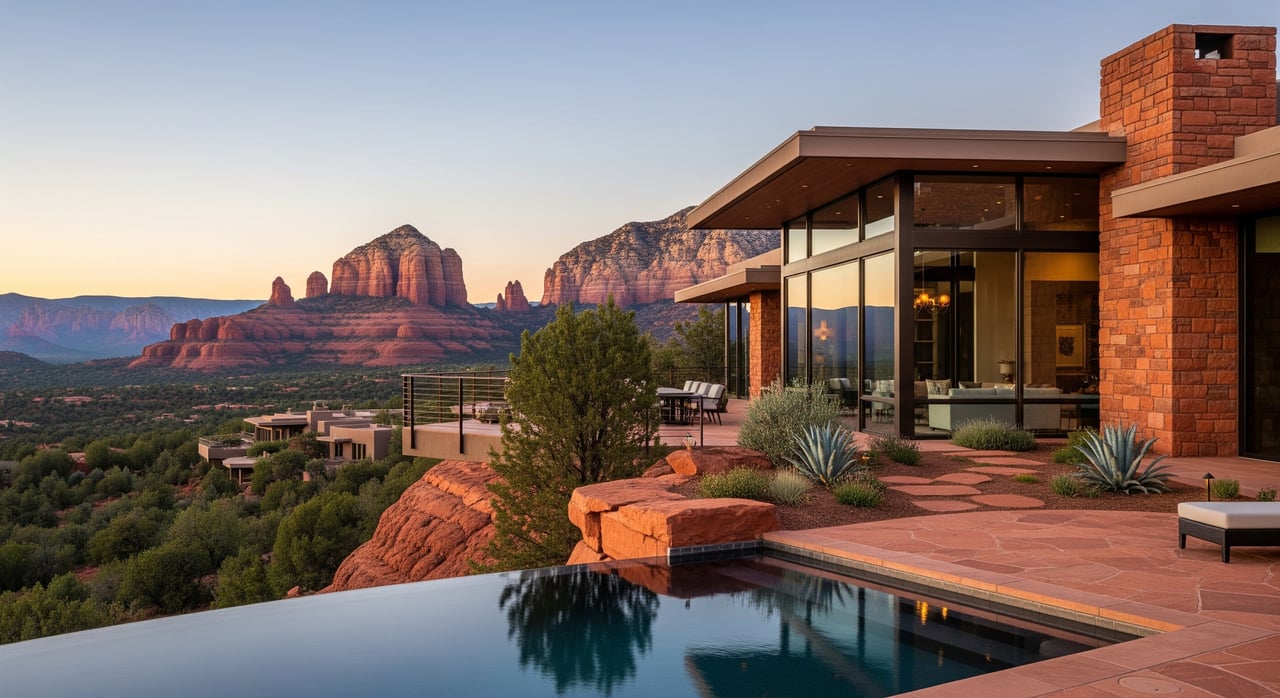
Sedona has many custom homes with red-rock views, guest houses, and special site improvements. Appraisers may find few truly similar sales. That can lead to conservative valuations or a request for additional support, such as a second appraisal. Working with an appraiser who understands Sedona’s micro-markets helps the report reflect view premiums and lot differences.
Rural systems and acreage
In nearby Cottonwood and parts of Yavapai County, properties may include septic systems, private wells, and acreage. Lenders and appraisers will verify functionality, access, and marketability, which can add steps to the process. Plan for any needed inspections early.
Second-home and rental considerations
Sedona attracts second-home buyers. If you plan to rent the property, your lender will review occupancy and rental history, and some may treat the loan as an investment product with stricter terms. Always confirm HOA rules and local regulations before you factor in rental income.
Wildfire and insurance
Wildfire exposure can raise insurance premiums or limit carrier options for certain properties. Because lenders require proof of hazard insurance, secure quotes early and be ready to demonstrate coverage that meets lender requirements.
Condo and townhome reviews
Higher-end condo and townhome purchases may require project-level reviews. Some jumbo investors impose strict requirements. Ask your lender about the project review timeline at the start, especially for jumbo second homes.
Which loan fits your situation?
Move-up buyer
If you are selling one home to buy another, proceeds from your sale may let you stay under the conforming limit or reduce your jumbo LTV. In competitive price bands, get pre-approved for both scenarios so you can pivot based on your final purchase price and appraisal outcome.
Second-home buyer
Expect higher down payment and reserve requirements than a primary home. If your second home will ever be rented, confirm how your lender will classify it and how that changes the rate, down payment, and reserves.
Investor or short-term rental buyer
Investment loans usually come with higher rates, stricter underwriting, and larger down payments. If the home will operate as a short-term rental, some lenders will treat it as an investment property even if you occasionally occupy it.
How to prepare and speed up closing
- Pull your credit and address any issues before you apply.
- Document assets clearly. Season large deposits and gather recent bank statements.
- Secure insurance quotes early, especially for homes with wildfire exposure.
- Ask for a detailed pre-approval, not just a pre-qualification.
- Choose a lender with recent jumbo closings in Sedona or Yavapai County.
- For unique homes, talk with your agent and lender about appraisal strategies, including a comp package and possible second appraisal.
- If timing two transactions, discuss bridge options and plan your funds flow with your lender.
Common pitfalls to avoid
- Assuming timelines are the same. Jumbo loans often need more time, so build flexibility into your offer.
- Waiting on insurance. A last-minute insurance surprise can stall closing.
- Overlooking HOA or condo rules. Some projects need extra review.
- Expecting rental income to qualify a second home. Many lenders will not count it for second-home classification.
- Bidding without a backup plan. If the appraisal comes in low, you may need extra cash or to revisit loan structure.
Your next step
Start with clarity on the loan limit, your down payment strategy, and a realistic closing timeline for your price range and property type. Then build a team that knows Sedona’s unique market. If you want introductions to experienced jumbo lenders, local appraisers, and insurance pros, we are happy to make connections through our trusted network and help you craft a competitive offer. Reach out to Karen Woodsmall to talk through your goals.
FAQs
What is the difference between jumbo and conventional loans in Sedona?
- A conventional conforming loan stays within the FHFA’s local limit and follows Fannie Mae and Freddie Mac guidelines, while a jumbo loan exceeds that limit and uses lender-specific rules that can require larger down payments, stronger credit, and more reserves.
How do I find the current conforming loan limit for Yavapai County?
- Check the latest conforming loan limits on the Federal Housing Finance Agency site; limits update each year, so verify before you shop.
How much down payment is typical for a Sedona second home with jumbo financing?
- Many lenders ask for 15–25% down and 6–12 months of reserves for jumbo second homes, with exact terms based on your credit profile and loan-to-value.
How long do jumbo loans take to close in Sedona?
- Plan for 30–60 days. Unique properties, second-home underwriting, deeper documentation, and project reviews can add time compared to a standard conforming loan.
What appraisal challenges should I expect for a Sedona luxury home?
- Limited comparable sales and unique features can lead to conservative appraisals or a requirement for additional support, such as a second appraisal; using a local appraiser helps.
Are jumbo mortgage rates always higher than conventional rates?
- Not always. Pricing shifts with market conditions and your profile; compare live quotes from multiple lenders to see today’s spread and total cost.