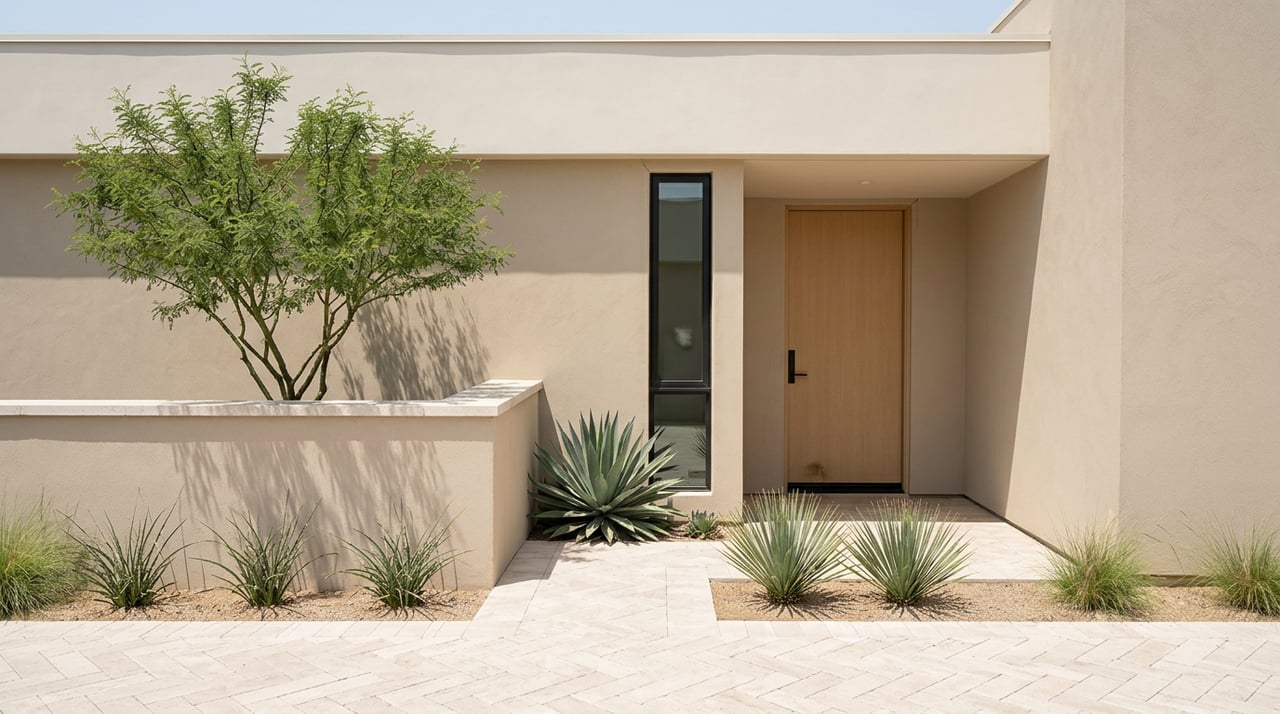
Downtown Phoenix real estate pricing spans from $200,000 entry-level condos at buildings like Summit at Copper Square and Orpheum Lofts to historic homes in Willo and Encanto-Palmcroft that sell well past $1.5 million. In April 2026, the most recent month with complete closing data, that spread showed up directly in the transactions: multiple historic district sales closed above $850,000 across Willo, F.Q. Story, and Encanto-Palmcroft, including a penthouse at Portland on the Park that sold near $1.2 million. All of it counts toward the same downtown Phoenix median. None of these buyers were competing with each other for anything.
That is the problem with treating $508,000, the rolling 12-month median sale price across ZIP codes 85003, 85004, and 85007 as of June 2026, as a single number that describes a single market. It doesn't. It describes two markets that happen to share a mailing address.
Why one number can't hold two products
The condo and loft tier runs roughly $200,000 to $700,000 and drives most of the transaction volume downtown. It's concentrated in the high-rise core near ASU's downtown campus, in buildings financed the way most condos get financed, with mortgages rather than cash. The historic single-family tier runs roughly $400,000 to $2 million and drives the dollar value, even though far fewer of these homes trade in any given month.
Because the two segments don't move in sync, the blended median swings on which type of sale happened to close that month. A month heavy with condo closings pulls the median down. A month with a couple of Encanto-Palmcroft estate sales pulls it back up. As of June 2026, year-over-year growth in the downtown median had cooled to 3.8 percent from a 5.6 percent reading just one month earlier, a shift that looks like slowing demand but is at least partly a function of which product happened to close more often.
Financing tells the same story from a different angle. Cash transactions made up about 24 percent of downtown closings as of that June 2026 reporting period, lower than Phoenix's citywide average, because financed condo buyers dominate the high-rise inventory that drives volume. A buyer trying to gauge how much negotiating room exists downtown needs to know which segment they're actually shopping, because the answer is different for a mortgaged condo buyer than for someone paying cash for a 1930s Tudor Revival in F.Q. Story.
The historic tier isn't one price either
Split downtown into its three ZIP codes and the picture sharpens. ZIP 85003, which covers Willo, F.Q. Story, and the west-of-Central corridor near the state Capitol, posted a median sale price of $588,000, up 5.4 percent year over year, as of the June 2026 report. That's the historic district anchor, and it's where the restored bungalow inventory concentrates.
Willo alone illustrates how slippery a district-level median can be. Active listings in Willo carried a median list price of $699,000 as of July 6, 2026, with 35 homes on the market and an average of 95 days sitting before a sale. Trailing 12-month sold data from around the same period put the median sale price closer to $780,000. Neither number is wrong. One reflects what sellers are currently asking. The other reflects what actually closed over the past year, a mix that includes larger estate sales the current list doesn't happen to contain. A buyer who anchors to whichever number shows up first in a search result is anchoring to a snapshot, not a market.
F.Q. Story, just west of Willo and bounded by McDowell Road, Roosevelt Street, Seventh Avenue, and Grand Avenue, is Phoenix's second-oldest designated historic district, listed in 1986 behind only the Roosevelt District. Its 602 homes, built between the late 1920s and late 1940s, run more architecturally cohesive than Willo's mixed styles, mostly Tudor Revival with the district's signature intact cobblestone streets. Entry pricing in 2026 runs roughly $400,000 to $1.2 million depending on size and condition, generally a lower entry point than Willo or Encanto-Palmcroft, though not by as much as it once was.
Encanto-Palmcroft, predominantly ZIP 85007, sits at the top of the historic tier. Smaller homes and fixer-uppers start around $500,000 to $650,000, with fully restored estates reaching $800,000 to $2 million or more.
Streets in Encanto-Palmcroft are named Palmcroft Way, Palmcroft Drive, Palmcroft SE, Palmcroft SW, Palmcroft NE, and Palmcroft NW, curving in a layout unusual for a downtown Phoenix neighborhood. Visitors get lost. Longtime owners navigate it without thinking.
That layout isn't trivia. It's the reason the district reads as private and quiet despite sitting minutes from downtown, and it's part of why it's been ranked among Phoenix's wealthiest neighborhoods. A buyer comparing "downtown Phoenix historic homes" as one category will miss why a Palmcroft address commands a different number than a Willo address two miles away.
Here's how the segments stack up as of mid-2026:
| Segment | ZIP | Typical 2026 price range | What's driving it |
|---|---|---|---|
| Condo and loft core | 85004 | $200K to $700K | High-rise inventory near light rail and ASU downtown, mostly financed buyers |
| Willo | 85003 | List median $699K, sold median near $780K | Local conservation status caps new construction, 22 original subdivisions |
| F.Q. Story | 85003 | $400K to $1.2M | Cohesive Tudor Revival architecture, intact cobblestone streets |
| Encanto-Palmcroft | 85007 | $500K to $2M+ | Curving Palmcroft street layout, proximity to Encanto Park, among Phoenix's highest-value districts |
The supply story is diverging, not converging
The gap between these tiers isn't closing. It's widening, because the two sides face opposite supply pressure.
Willo's conservation status keeps commercial development out of the district, and its housing stock still traces back to 22 subdivisions platted between the turn of the century and the start of World War II, which means the historic inventory a buyer competes for today is close to the same inventory that existed decades ago. That scarcity is part of what supports the district's price floor even in months when days on market stretch out.
The condo core is moving the other direction. Citywide, Phoenix condo inventory grew 118.8 percent year over year as of late July 2026, even as median sold prices slipped 3.2 percent over the same period, with 1,172 active listings and a median sold price of $303,000. Closed sales accelerated 16.5 percent in that window, a sign that buyers are absorbing the new supply, just not fast enough to stop prices from softening.
More supply is coming. Demolition of legacy commercial structures on Roosevelt Row was advancing as of March 2026 to clear land for new apartment development, and Banner Real Estate Group secured preliminary city approval during a May 2026 site plan review for a 21-story, 320-unit multifamily tower at 1101 N. 1st Street, complete with a pool deck, terraces, a sports court, and shared workspace. Land in the Roosevelt Row corridor has gotten expensive enough that developers there are building tall to make the numbers work, which points to more condo and apartment product landing in the same footprint that already has more inventory than it did a year ago.
Put the two trend lines side by side and the thesis holds. The historic tier is structurally supply-constrained. The condo tier is structurally supply-expanding. A single median sitting between them will keep meaning less each year, not more.
What this means if you're actually shopping downtown
Start by deciding which product you're really buying, not which ZIP code. A financed condo purchase near the light rail core behaves like a growing, buyer-favorable inventory market, with room to negotiate and more competition on the way. A historic single-family purchase in Willo, F.Q. Story, or Encanto-Palmcroft behaves like a constrained, seller-favorable market where the downtown-wide sale-to-list ratio of 97.4 percent, as of the June 2026 reporting period, understates how tight the best blocks actually are.
Then ask what's included in whatever median you're looking at. A list-price median and a sold-price median can differ by tens of thousands of dollars in the same district in the same season, as Willo's own numbers show. If a source doesn't specify whether a figure is active, pending, or closed, and over what window, treat it as a starting question, not an answer.
Finally, confirm the ZIP before you fall in love with a number. 85003 covers Willo, F.Q. Story, and the west-of-Central Capitol area. 85004 is the high-rise condo core near ASU's downtown campus. 85007 carries Encanto-Palmcroft along with a mix of historic and infill product near the Capitol. School attendance boundaries don't always line up neatly with these ZIP edges, so anyone weighing that factor should verify by exact address rather than by ZIP code alone.
FAQ
Is downtown Phoenix a buyer's market or a seller's market right now? It depends entirely on which segment you're in. The condo tier, with inventory up sharply and prices softening, currently favors buyers. The historic single-family tier, constrained by preservation status and limited new construction, is tighter, with sale-to-list ratios running closer to full price.
Do homes in Willo, F.Q. Story, or Encanto-Palmcroft come with renovation restrictions? Local historic district designation typically adds a review layer for exterior changes. Anyone planning significant renovations should confirm the specific requirements for a property's district before finalizing a purchase timeline or waiving related contingencies.
Which ZIP code should I search if I want a specific type of home? Search 85003 for Willo, F.Q. Story, and the west-of-Central Capitol corridor. Search 85004 for the high-rise condo core near ASU's downtown campus. Search 85007 for Encanto-Palmcroft and the broader Capitol-area mix of historic and infill product.
Whether you're weighing a downtown Phoenix condo against a historic bungalow, or comparing either against what your budget buys in Prescott's high country, the number that matters is the one that applies to the actual property you're considering, not the blended average sitting above it. Real Prescott Property Group works with buyers evaluating both the Prescott and Quad Cities market and Phoenix-metro opportunities side by side. Request a Personalized Market Plan to see what your specific budget and goals actually point to.
This article is general information, not legal, tax or financial advice. Consult a qualified professional about your situation.