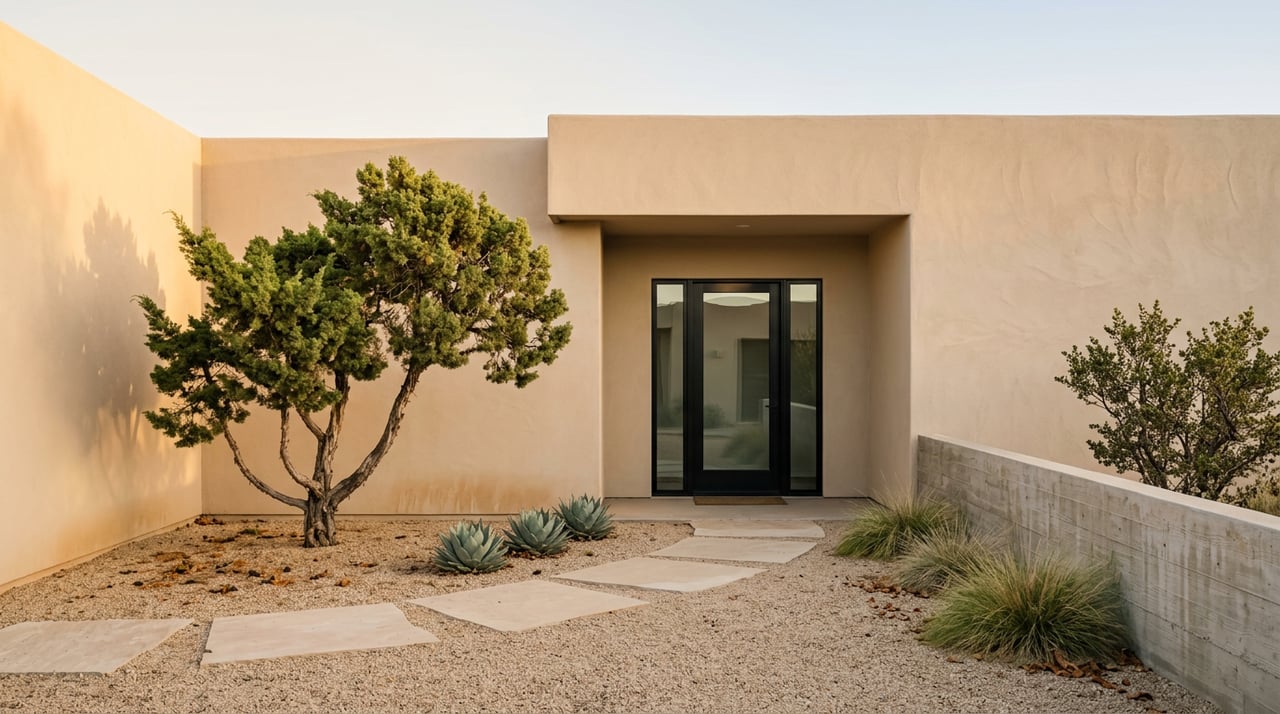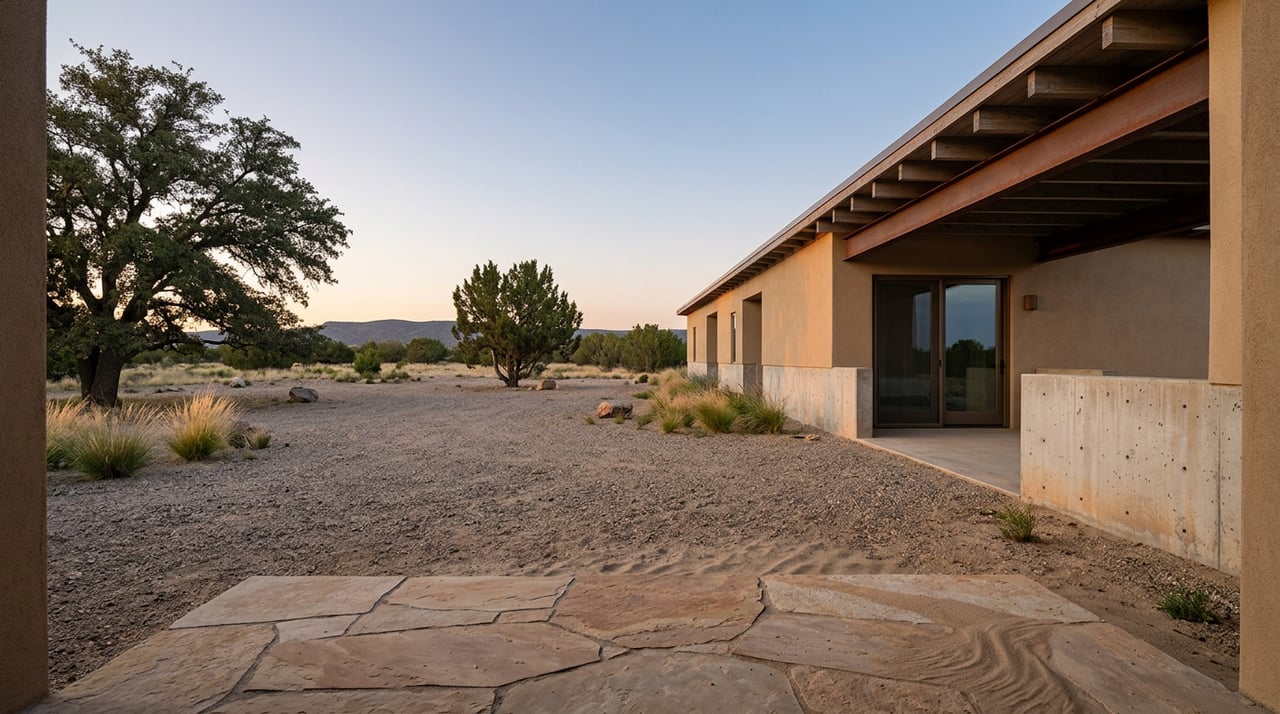
Two homes go up for sale in Chino Valley this month. Same square footage, same finishes, same asking price within a few thousand dollars of each other. On paper they are interchangeable. In the closing paperwork they are not even close.
One comes with a single-page hookup confirmation from the town's utility office. The other arrives with a Domestic Water Well Addendum, a Water Use Addendum Seller's Property Disclosure Statement, and a well completion log the buyer's agent has to go pull from a state database. Arizona Realtors requires both of those well forms on any transaction where the home is served by a private or shared well, precisely because the water behind that tap is not guaranteed, not regulated for performance, and not inspected as part of a standard home inspection.
That paperwork gap is the first sign of something buyers comparing Chino Valley listings against Prescott Valley or Prescott proper tend to miss. The address says Chino Valley on both listings. The water underneath them does not behave like one market. It behaves like three.
Three Systems, One Zip Code
Say "Chino Valley water" and most buyers picture a single town utility sending a single bill. That's true for part of town. It is not true for all of it.
The Town of Chino Valley's own Utility Division operates wells, treatment, and storage for the customers inside its service area, billed directly through the town. Elsewhere in the same town limits, small private providers run their own systems entirely separate from the municipal one. Chino Meadows II Water Company, serving the area around Road 1 North and Cactus Wren, is one example: a private utility with its own rate schedule, regulated for pricing by the Arizona Corporation Commission but structurally distinct from anything the town runs. And outside both of those service areas, homes rely on private domestic wells with no water utility at all, just a pump, a casing, and whatever the aquifer happens to be doing that year.
Three arrangements, one name on the map. A buyer who assumes "it's Chino Valley, so it's town water" can be wrong twice before they've finished reading the listing description.
The Part That Runs Backward
Here is the detail that should reorder how a buyer thinks about this town, not just inform them about it.
The City of Prescott, a separate municipality with its own water bills and its own city council, operates five active municipal wells inside Chino Valley. Three more sit near the Prescott airport, also inside Chino Valley's boundaries. Water from those wells is pumped into a pair of five-million-gallon reservoirs at the Chino Water Production Facility, then pushed by high-pressure pumps into Prescott's own distribution system. None of that water is earmarked for Chino Valley residents. It runs straight through town on its way somewhere else.
The reasoning behind that arrangement is almost mechanical. Large municipal systems can afford to drill where the aquifer performs best, regardless of whose service boundary that happens to fall inside, because they have the bonding capacity to build pipelines and treat water wherever the geology cooperates. Smaller private systems and individual domestic well owners don't have that flexibility. Their wells sit where the property sits, not where the water is most reliable.
That asymmetry means the aquifer underneath Chino Valley is already supporting two separate growth stories at once: the town's own, and a chunk of Prescott's, before a single gallon reaches a Chino Valley kitchen faucet.
Where the Strain Shows Up First
None of this matters in the abstract until you can point to where it becomes a real cost. The Citizens Water Advocacy Group, which has tracked the aquifer for years, documents that domestic wells are already going dry on the western margin of the Little Chino Valley and along Williamson Valley Road, at the edges of the basin where the water table has fallen furthest. Some long-established homes closer to the highway have already needed to deepen an existing well or drill a replacement.
The mechanism is straightforward. As groundwater levels drop, the edges of an aquifer basin feel it before the center does. A domestic well that was drilled decades ago, sized for the water table of that era, can lose production capacity years before a large municipal well nearby even notices a change. A home on a private well near that western edge or along that corridor carries a materially different risk profile than a home two miles away on town water, even if the two listings look identical on a spec sheet.
Municipal systems will have water long after individual domestic wells run into trouble, not because the water is theirs by right, but because they have the capital to keep chasing it downward.
That is the honest version of how this works. It is not a reason to avoid the area. It is a reason to ask a more specific question before writing an offer than "does the house have water."
What This Actually Changes About Due Diligence
For a buyer who has already narrowed the search to Chino Valley and is now comparing specific properties, the water source should move from a footnote to an early question, right alongside price and square footage.
| Water Arrangement | What to Verify Before Offer | Where to Look |
|---|---|---|
| Town utility service | Confirm the parcel is inside the current service boundary and get the account transfer process in writing | Town of Chino Valley Utility Division |
| Private company service (e.g., Chino Meadows II) | Confirm current rate schedule and any pending rate cases | Arizona Corporation Commission filings |
| Private domestic well | Pull the well registry number, driller's completion log, casing depth, and static water level at completion | Arizona Department of Water Resources Well Registry |
For any well-served property, Arizona law requires the seller and buyer to sign a Domestic Water Well Addendum disclosing that the home relies on a residential well, along with a companion disclosure statement covering what the seller knows about that well's condition and use. Neither form substitutes for an actual inspection. Arizona home inspectors do not test wells as part of a standard inspection, so a buyer relying on a well needs to arrange that separately, request any prior pump test results, and treat a well with no documented history the same way they would treat a roof with no documented age: workable, but unverified.
If the property is on a septic system rather than sewer, which is common outside the town's core service area, Arizona's onsite wastewater rules require the seller to provide a current Report of Inspection and the buyer to file a Notice of Transfer at resale. That inspection is where a failing leach field or an undersized tank shows up, well before it becomes the buyer's problem instead of the seller's.
None of this is a reason to slow down a purchase that otherwise makes sense. It is a reason to sequence the contingencies correctly: well and septic verification early, before the inspection period closes, not as an afterthought once the rest of the deal is already emotionally settled.
Before You Write an Offer
- Ask directly which of the three water arrangements serves the specific parcel, not just the general area
- For well-served homes, request the ADWR registry number and completion log before the inspection period, not after
- For septic-served homes, confirm the seller has a current Report of Inspection ready to provide
- If the property sits near Chino Valley's western edge or along the Williamson Valley Road corridor, ask when the well was last tested and what its static water level looked like at that test
A Few Questions Buyers Keep Asking
Does a domestic well guarantee water forever? No. Arizona treats groundwater as a public resource managed by the state, not a private property right, and a well only reflects the right to pump for beneficial use on that property, not a guarantee of supply.
Is town water in Chino Valley more expensive than a private well? Cost comparisons vary by household usage and by which private company or well situation you are comparing against, and rate schedules change, so this is worth confirming directly with the specific provider rather than assuming based on nearby listings.
Does the fact that Prescott pumps water from inside Chino Valley affect Chino Valley residents' own supply? The two systems draw from the same regional aquifer, and CWAG's data shows the practical effect shows up most clearly at the edges of the basin, where domestic wells are already under the most strain.
Water source is not the kind of detail that shows up in a listing photo, and it rarely comes up until the paperwork forces the question. For a buyer comparing two Chino Valley homes at the same price point, it may be the single variable that tells you the most about what you are actually buying.
If you are weighing a Chino Valley property against something in Prescott Valley or Prescott proper and want a clear read on what serves a specific address, Karen Woodsmall and the Real Prescott Property Group can walk through the water picture parcel by parcel before you write an offer. Request a Personalized Market Plan to get started.